
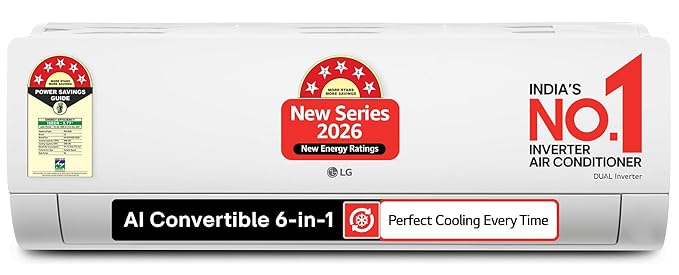
A 5 star AC saves electricity. Everyone has heard that line at a showroom. What nobody explains is how much it saves, after how many years it pays for itself, and whether it is worth ₹10,000 extra for the way you actually run an AC. We sell both ratings, so here is the plain math instead of the sales pitch.
First, a 2026 catch almost everyone misses
BEE tightened the star rules again this year. The machines did not change, the bar did. A model that was sold as a 5 star in 2025 now carries a 4 star label in 2026, and some 2022-era “5 star” units read as 3 star today. Two lessons come out of this. Never compare a star rating across different years, and stop reading only the stars. Look at the actual ISEER number and the “units per year” figure printed on the yellow BEE sticker. That sticker is doing the real talking.
How the saving actually works
ISEER is just an efficiency score. Higher ISEER means fewer units of electricity for the same cooling. For a 1.5 ton unit, a 5 star is roughly 20 to 30 percent more efficient than a 3 star from the same line, which works out to about 300 to 500 units saved across a year.
One important catch: that “units per year” number on the label assumes 1,600 hours of running, which is about 5 and a half hours a day through the season. Run the AC harder and you save more. Put it in a guest room used a few weekends a year and the gap almost vanishes.
The rupee math (including the part showrooms skip)
This is where buyers get fooled. People check the cheap first-slab electricity rate and assume their AC units cost the same. They do not. An AC pushes your monthly consumption into a higher slab, so every extra unit is billed at the top-slab rate, often ₹8 to ₹12 in many states, not ₹4. Here is a realistic year for a 1.5 ton, running normally:
| 1.5 Ton inverter | 3 Star | 5 Star |
|---|---|---|
| Approx units/year | ~1,400 | ~1,000 |
| Running cost at ₹8/unit | ~₹11,200 | ~₹8,000 |
| Yearly difference | — | ~₹3,200 saved |
So a normal household saves somewhere between ₹2,400 and ₹4,000 a year, swinging with your state tariff and your daily hours. A 5 star usually costs ₹8,000 to ₹12,000 more at purchase. Divide the premium by the saving and it pays back in roughly three years of regular summer use. After that, the difference is money staying in your pocket for the rest of the AC’s ten-year life.
When the 5 star is clearly the smarter buy
- You run the AC 5 to 8 hours a day through a long summer
- It goes in the main bedroom or living room, used daily
- You plan to keep it 7 to 10 years
- Your area has a high electricity tariff
When a 3 star is honestly the right call
If the AC is going into a guest room used a few weeks a year, or you will move or change a rental within a year or two, or your daily use stays under three or four hours, the premium may never come back to you. We will say it plainly: in those cases, buy the 3 star and put the saved money toward a stronger brand or a good stabiliser. A reliable-brand 3 star beats a weak-brand 5 star every single time.
The one comparison rule that keeps you honest
Compare a 5 star inverter against a 3 star inverter, same brand, same tonnage. Do not let anyone stand a 5 star non-inverter next to a 3 star inverter and call it a fair fight. They are different machines and the numbers stop meaning anything.
What we have in stock right now
If you have decided the 5 star is worth it, the Hitachi 1 Ton 5 Star and the LG 1.5 Ton 5 Star Smart are the efficient picks we keep. If the 3 star fits your usage better, look at the Blue Star 1 Ton 3 Star, the Voltas 1.5 Ton 3 Star or the Daikin 1.5 Ton 3 Star. The full range sits on our air conditioners page.
Everything ships with Cash on Delivery. Tell us your room size and roughly how many hours a day the AC will run, and we will point you to the one that fits your bill, not the one with the fattest margin.

Leave a Comment
Your email address will not be published. Required fields are marked *